

Greetings! [ Log in ] [ Register ] [ Intranet ] [ Manage Mailing Lists Subscriptions ]
  • Home
    • Ocean Leadership
  • About NOPP
    • Program Overview
      • Subtitle E – National Oceanographic Partnership Program
    • Program Updates
    • Excellence in Partnering Awards
    • Style Guide and Logos
    • Contact Us
  • Committees
    • Interagency Working Group on Ocean Partnerships (IWG-OP)
    • Interagency Working Group on Facilities and Infrastructure (IWG-FI)
    • Ocean Research Advisory Panel (ORAP)
      • ORAP Meetings
        • ORAP Publications and Reports
      • Sub-Groups
        • Ocean Acidification Task Force
        • ORAP Education Sub-panel
        • ORAP Industry Sub-panel
        • ORAP Ocean Observing Sub-panel
  • Funded Projects
    • PI Annual Reports
    • FY2011 Projects
      • Topic 1. Marine Mammal Detection and Monitoring
      • Topic 2. Coordinated Regional Efforts That Further the U.S. Integrated Ocean Observing System (IOOS)
    • FY2010 Projects
      • Topic 1. Improving Attachments of Electronic Data Loggers to Cetaceans
      • Topic 2. Developing Environmental Protocols and Monitoring to Support Ocean Renewable Energy and Stewardship
      • Topic 3. Exploration and Research of Mid-Atlantic Deepwater Hard Bottom Habitats and Shipwrecks with Emphasis on Canyons and Coral Communities
    • FY2009 Projects
      • Topic 1: Improving Wind Wave Predictions: Global to Regional Scales
      • Topic 2: Sensors for Measurement of Biological, Bio-Optical, Optical, or Chemical Properties of the Ocean
      • Topic 3: Improving Tropical Cyclone Intensity Forecasting
    • FY2008 Projects
      • RFP: Exploration and Research of Northern Gulf of Mexico Deepwater Natural and Artificial Hard Bottom Habitats with Emphasis on Coral Communities: Reefs, Rigs and Wrecks
      • TOPIC 3: Sensors for Measurement of Biological, Bio-Optical or Chemical Properties of the Ocean
      • TOPIC 4: Atlantic Meridional Overturning Circulation (AMOC)
    • FY2007 Projects
      • Topic 4A: Coastal Effects of a Diminished-Ice Arctic Ocean
      • Topic 4B: Marine Mammals
    • FY2006 Projects
      • TOPIC 2A: Understand, identify gaps and predict changes in the workforce for ocean sciences, technology, and operations
      • TOPIC 3A: The ARGO Project: Global Ocean Observations for Understanding and Prediction of Climate Variability
      • TOPIC 4A: An Open-Source Community Model for Coastal Sediment Transport
    • FY2005 Projects
      • Topic 1A: Fusing Multi-Sensor Regional Data to Monitor and Quantify Coastal Processes
      • Topic 4 (CHEMO III): Imvestigations of Chemosynthetic Communities on the Lower Continental Slope of the Gulf of Mexico
      • Topic 4: Assesment of Global Ocean Data Assimilation Experiment (GODAE) Boundary Conditions for Coastal Ocean Predictions
      • Topic 4A: New Methods for Detection of Fish Populations or Mapping of Fish Habitat
      • Topic 4B: Sensors for Sustained, Autonomous Meaturement of Chemical or Biological Parameters in the Ocean
    • FY2004 Projects
      • Topic 1: Achieve and Sustain an Integrated Ocean Observing System (IOOS)
      • Topic 2: Promote Lifelong Education
      • Topic 3: Modernize Ocean Infrastructure and Enhance Technology Development
    • FY2003 Projects
      • Topic 1. Achieve and Sustain an Integrated Ocean Observing System (IOOS)
      • Topic 4. Foster Interagency Partnerships to Increase and Apply Scientific Knowledge
    • FY2002 Projects
      • Topic 1: Achieve and Sustain an Integrated Ocean Observing System (IOOS)
      • Topic 2: Promote Lifelong Ocean Education
    • FY2001 Projects
      • Topic 1: Achieve and Sustain an Integrated Ocean Observing System (IOOS)
      • Topic 3: Modernize ocean infrastructure and enhance technology development.
    • FY2000 Projects
      • Topic 1: Achieve and Sustain an Integrated Ocean Observing System (IOOS)
      • Topic 3: Modernize ocean infrastructure and enhance technology development
    • FY1999 Projects
      • Topic 1: Achieve and Sustain an Integrated Ocean Observing System (IOOS)
      • Topic 3: Modernize ocean infrastructure and enhance technology development.
    • FY1998 Projects
      • Topic 1: Achieve and Sustain an Integrated Ocean Observing System (IOOS)
      • Topic 3: Modernize Ocean Infrastructure and Enhance Technology Development
    • FY1997 Projects
      • Topic 1: Achieve and sustain an Integrated Ocean Observing System (IOOS)
      • Topic 2: Promote lifelong ocean education
      • Topic 3: Modernize ocean infrastructure and enhance technology development
      • Topic 4: Foster interagency partnerships to increase and apply scientific knowledge
  • Funding Announcements
  • Publications & Reports
  • News Archive

Interagency Working Group on Ocean Partnership’s Attaining an Operational Marine Biodiversity Observation Network Report Released
Posted by Katie Horst on Tuesday, March 15th, 2011 at 10:50 am
Filed under: News
Share

Committee Part of the National Oceanographic Partnership Program

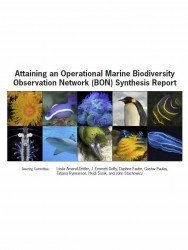
Washington, DC – The National Oceanographic Partnership Program (NOPP) today announced the release of the Attaining an Operational Marine Biodiversity Observation Network Synthesis Report. The report is the result of a three-day workshop held at the Consortium for Ocean Leadership to plan for the implementation of a sustainable marine Biodiversity Observing Network (BON).

Currently, there is no standardized, coordinated approach to monitoring marine biodiversity, the degree of variation in marine life forms. According the Interagency Working Group on Ocean Partnerships (IWG-OP), maintenance of marine biodiversity may be a key factor for sustained ecosystem health, which humans depend on daily for food and jobs.

Thirty-five scientists and 13 representatives of seven federal agency sponsors (NOAA, NASA, MMC, ONR, NSF, BOEMRE, and the Smithsonian Institution) met in May 2010 to discuss the overarching components of BON, which culminated into the pioneering Attaining an Operational Marine Biodiversity Observation Network Synthesis Report.

The report provides a set of recommendations and case studies for implementing a national and global marine BON. The following recommendations were developed by seven steering committee members (Linda Amaral-Zettler, Marine Biological Laboratory; J. Emmett Duffy, Virginia Institute of Marine Science; Daphne Fautin, University of Kansas; Gustav Paulay, University of Florida; Tatiana Rynearson, University of Rhode Island; Heidi Sosik, Woods Hole Oceanographic Institution; and John Stachowicz, University of California-Davis) based on discussions among workshop participants:

1. Coordinate biodiversity sampling across taxa, habitats, hierarchical levels, and methods from microbes to mammals;

2. Maximize compatibility of BON with legacy data;

3. Establish one or more Biodiversity Observation Center(s) to coordinate sample processing, including taxonomic identifications, data management, and training and invest in the computational expertise to handle large datasets in an open access environment;

4. Synthesize and make accessible marine taxonomic resources;

5. Invest in developing new approaches for automated sample processing;

6. Modernize and enhance the nation’s physical infrastructure for marine exploration; and

7. Initiate an integrated marine BON demonstration project soon.

“The workshop participants found no technology hurdles to achieving a marine biodiversity observing network that will monitor status and trends of living marine resources and help to secure the vital ecosystem services they provide,” said Reginald Beach, Ph.D., senior scientist at NOAA Office of Ocean Exploration and Research. “I believe the best way to organize and implement that network is through partnerships and I look forward to supporting those efforts.”

The entire synthesis report is available here. If you would like a hard copy of the report, please email your request and address to noppo@oceanleadership.org.

For more information on NOPP, visit the program’s website.

-###-

About Consortium for Ocean Leadership

Ocean Leadership is a Washington, D.C.-based nonprofit organization that represents 96 of the leading public and private ocean research education institutions, aquaria and industry with the mission to advance research, education and sound ocean policy. The organization also manages ocean research and education programs in areas of scientific ocean drilling, ocean observing, ocean exploration and ocean partnerships.

About National Oceanographic Partnership Program

The National Oceanographic Partnership Program (NOPP) is a program of the Consortium for Ocean Leadership. NOPP facilitates collaborations between federal agencies to identify and fund scientific partnerships among academia, government, industry and other members of the ocean science community. These partnerships have strengthened and expanded oceanographic research for more than a decade.

Media Contact:

Kristin Mellon
202-787-1644
kmellon@oceanleadership.org


Related Posts:

  • Program Update – March 2011
  • Program Update – April 2011
  • Program Update – February 2011
  • NCSE Recommendations for a National Marine Biodiversity Observing Network
  • Program Update – November 2010
« Home | « Previous Page

Follow Us

Subscribe via Twitter
140 Followers
Subscribe via Facebook
185 Fans
Subscribe via RSS
61 Readers
Subscribe via Email
Subscribe

Upcoming Events

  • No events.

What's Hot This Month

  • New Publication from NOPP-Funded Tropical Cyclone ResearchNew Publication from NOPP-Funded Tropical Cyclone Research: The NOPP Office would like to congratulate Takemasa Miyoshi and Masaru Kunii on their recent publication in the Journa...
  • First Legal Roadmap to Tackle Local Ocean Acidification HotspotsFirst Legal Roadmap to Tackle Local Ocean Acidification Hotspots: Coastal communities hard hit by ocean acidification hotspots have more options than they may realize, says an interdisci...
  • NOPP Photo of the Month – Tagged N. Elephant SealNOPP Photo of the Month – Tagged N. Elephant Seal: The Northern elephant seal pictured has a CTD (conductivity, temperature, depth) tag attached to it by a team of Univers...
  • Program Update – May 2010Program Update – May 2010: The Biodiversity Ad Hoc Group, of the Joint Subcommittee on Ocean Science and Technology’s (JSOST) Interagency Working G...
  • BOEM Releases Ocean Science Journal, Volume 9 Issue 1BOEM Releases Ocean Science Journal, Volume 9 Issue 1: The Bureau of Ocean Energy Management (BOEM) has released Volume 9, Issue 1 of BOEM Ocean Science, their quarterly Sci...
  • Attaining Operational Marine Biodiversity Observations WorkshopAttaining Operational Marine Biodiversity Observations Workshop: Under the auspices of the Joint Subcommittee on Ocean Science and Technology (JSOST) Interagency Working Group on Ocean ...
  • Program Update – March 2012Program Update – March 2012: Staff from the NOPP Program Office attended the annual project review of the Fiscal Year 2009 NOPP topic, Improving Trop...
  • Sunburst Sensors Wins Award to Build OOI pH and CO2 SensorsSunburst Sensors Wins Award to Build OOI pH and CO2 Sensors: Sunburst Sensors, an engineering company based in Missoula, Montana that designs autonomous chemical sensors to measure ...
  • NOPP Names “Marine Mammal Detection and Monitoring” Funding Award WinnersNOPP Names “Marine Mammal Detection and Monitoring” Funding Award Winners: Scientists from Four Universities Awarded Multiple-Year Funds for Marine Mammal Detection, Classification and Localizati...
  • NOPP Best Practices and FAQ’sNOPP Best Practices and FAQ’s: For information on how NOPP funding announcements are created and FAQ's about the NOPP review process, please review thi...

Archives

Visitors Online

7 Users Online

NOPP-Funded Project Websites

  • ARGO
  • BRIDGE
  • CHEMO III
  • DECAF
  • ECCO
  • FleetLink
  • GODAE
  • HYCOM
  • MISST
  • NearCoM
  • NOPP Drifters
  • OSTO Workforce Study

Recent Posts

  • New Publication from NOPP-Funded Tropical Cyclone Research
  • BOEM Releases Ocean Science Journal, Volume 9 Issue 1
  • Program Update – March 2012
  • New Publication from NOPP-Funded Project
  • Sunburst Sensors Wins Award to Build OOI pH and CO2 Sensors

RSS Latest From Ocean Leadership

  • NOAA, BOEM: Historic, 19th Century Shipwreck Discovered in Northern Gulf of Mexico
  • First Satellite Tag Study for Manta Rays Reveals Habits and Hidden Journeys of Ocean Giants
  • Antarctic Octopus Study Shows West Antarctic Ice Sheet May Have Collapsed 200,000 Years Ago
  • Scientists Observe Rapid Change In Underwater Volcano
  • Sea Lions Fuel Ocean Life

RSS Latest from ScienceDaily

  • Not all 'good cholesterol' is 'good': Raising HDL not a sure route to countering heart disease
  • Children with cancer have complete responses in a COG phase 1 trial: Pills zero in on abnormal genes that drive specific cancers
  • Bats: A good immune system ensures success in reproduction
  • Damaged connections in Phineas Gage's brain: Famous 1848 case of man who survived accident has modern parallel
  • The Rhine is five million years older than first thought: Age of the river corrected based on fossils
QR Code Business Card Web design by Will Ramos | © Copyright National Oceanographic Partnership Program (NOPP) 2007-2012. All Rights Reserved. | 19 queries in 0.411 seconds.